Sunday, June 3, 2012

3 June 2012

    As promised, I'll start this week the events of last Sunday in El-Houleh. I won't go into much detail on the attack itself, as there isn't much to say. It was a horrific attack on innocent civilians by the Assad government. I will instead focus on the reaction of the UN and the implications this attack has for the Organisation.
    On the  same day, the Security Council issued a press statement condemning "in the strongest possible terms the killing...of dozens of men, women and children and the wounding of hundreds more...in attacks that involved a series of Government artillery and tank shelling on a residential neighbourhood."  This was to be expected. Other expected reactions include condemnations by Ban Ki-moon, and Kofi Annan, and a demand for consequences by Navi Pillay, UN High Commissioner for Human Rights. The reaction that surprised me, however, were French president François Hollande's public musings about a military intervention. Given that he explicitly said France would not intervene without a UN mandate, I can only assume that this is a political maneuver. Russia and China still categorically reject any intervention in Syria. Russia in particular has a vested interest in keeping President Assad in power. Until this changes, there will be no UN mandate.
    There being no veto to over come, the Human Rights Council reacted far more decisively to the attacks. On Friday, it convened a special session to address the matter, and adopted a resolution deploying a civilian fact finding mission to El-Houleh, and established an independent, international inquiry into the matter. What strikes me about this is how its being reported in the press. ARD, the German public broadcaster reported that the Council had referred the situation to the International Criminal Court. While it certainly wouldn't be uncalled for for the ICC prosecutor to investigate the matter proprio motu under article 15 of the Rome Statute, the Human Rights Council did not ask him do so. In fact, such a  request must come from the Security Council.
    The other UN matter these attacks call into question is the UN Stabilisation Mission in Syria (UNSMIS). I must admit I am somewhat torn on this matter. UNSMIS was not able to prevent these attacks, but that is not their mandate.  Following the attacks, UNSMIS did exactly what it was set up to do. The mission investigated the attack and confirmed the use of tanks and artillery against civilians. Without the mission on the ground, I would guess we would have a few unreliable reports of government shelling, government propaganda blaming the attack on terrorists, and a shouting match between the Syrian government and the west over who was responsible. As is we have a much clearer picture.
    This week also saw the release of the latest IAEA report on the Iranian Nuclear Programme. The Director-General was less scathing in this report than his last report seven months ago. He gives Iran credit for coming closer to reaching a structured inspection agreement with the agency, and for complying with one of three aspects of the nuclear ban imposed by the Security Council, namely the suspension of reprocessing activities. However, the report still paints a fairly disturbing picture. Since 2002, Iran has processed roughly 55 tonnes of uranium hexafluoride, to produce 6 tonnes of 5% enriched uranium, the upper limit for safe use in nuclear power plants, and 150 Kg of 20% enriched uranium. To put this into perspective, the latter amounts to only slightly less fissile material than what was used in the bomb dropped on Hiroshima. There are still undisclosed and improperly disclosed nuclear sites. Iran continues to ignore the ban on heavy-water activities as well.
    Strangely, the report makes no mention of the negotiations between Iran and P5 + Germany held in Istanbul earlier this year. I can only imagine that this is due to a mandate issue. The negotiations are clearly within the scope of the report, but were held outside the framework of the United Nations. My guess is that the Director General may only report on the activity of the IAEA on the matter.
    Finally, I would like to address a number of statements made by UN Human Rights Officials this week. When I first started writing about the UN six weeks ago, I never expected I would be dealing with Canadian domestic politics with such regularity, but for the second time in three weeks UN Special Rapporteurs in the Office of the High Commissioner for Human Rights have been very critical of Canada, and rightfully so.
    First, Maina Kiai, UN Special Rapporteur on the rights to freedom of peaceful assembly and association, and Frank La Rue, Special Rapporteur on the right to freedom of opinion and expression, both heavily criticised Bill 78 of the Quebec National Assembly, as violating the fundamental rights in their respective mandates.
     Second, the Committee against Torture accused Canada of complicity in torture. Citing several the cases of Maher Arar, and Omar Khadr among others, the committee pointed out several instances in which actions by the Canadian government lead to individuals being tortured, and blamed changes in Canada's immigration policy. The committee recommended the immediate transfer of Omar Khadr to Canadian custody, and the compensation of three men bein held on so-called security certificates.

Sunday, May 27, 2012

27 May 2012


This week was a rather light one in terms of official meetings at the UN. In fact it was the first meeting since the end of break for New Years and Christmas in which the Security Council held no official meetings. This is not without reason though. This past week, the Security Council conducted an official visit to West Africa, visiting Liberia, Côte d'Ivoire, and Sierra Leone. While all fifteen members of the Council sent representatives on the trip, Vitaly Churkin and Li Baodong, the permanent representatives of Russia and China respectively, were notably absent from the Council's delegation. I can only speculate that this due to some objection to the peacekeeping missions in the the three countries on the itinerary or to the Council's response to the recent coups d'états in Mali and Guinea-Bissau. 

In the first leg of the trip, Council members visited Liberia to evaluate both the sanctions against that country and the peacekeeping mission deployed there. Liberia, it has to be said, is one of the few political success stories in Africa. In the decade following the end of the most recent civil war, the country transitioned quickly to not only a fragile peace, but a developing democracy. The 2005 elections saw the election of Ellen Johnson Sirleaf to the presidency. Johnson Sirleaf is not only the first woman to lead an African country, but is regarded internationally as a committed democrat. Last year she was awarded the Nobel Peace Prize.
Given these developments, there are some both in Liberia and internationally who have began to question the need for sanctions and for the United Nations Mission in Liberia (UNMIL). In his most recent report on the matter, Ban Ki-moon recommended a three-withdrawal of UNMIL. What concerns me, however, is what will happen in 2017 when President Johnson Sirleaf is constitutionally required to step down. I can only hope that some portion of UNMIL remains on the ground at least until then and that, if should matters escalate, the mission is able to fulfil its mandate and keep the peace.
 
The second leg, while in Côte d'Ivoire, again to inspect the peacekeeping mission, and to discuss the issue of refugees on the border with Liberia. At present, there are a significant number of Ivorian refugees in Liberia, and Liberian refugees in Côte d'Ivoire, with both groups claiming it is less safe in the other country. One of the stranger things to come out of these meetings is that the Ivorian refugees seem to be claiming their country has been overrun by Burkinabé. The people they are referring to are in fact Ivorians who supporter President Alassane Outtara whose citizenship has been called into question. Best I can tell, the claim that Outtara is in fact a citizen of Burkina Faso is a complete fabrication. I would guess that it was an attempt by his predecessor, Laurent Gbagbo, to discredit him during last year's election and ensuing violence.
Also on this portion of the trip, Council members met with representatives of the Economic Community of West African States (ECOWAS), as Côte d'Ivoire currently serves as chair of the ECOWAS Commission. Main topics on the agenda being the recent coups in West Africa, in which ECOWAS has served as a mediator in an attempt to ensure stability and keep matters from escalating.

In the final leg, in Sierra Leone, Council members met with ranking members of Sierra Leonean government, and with leaders of the peacekeeping and civilian missions in that country. Relations between the UN and Sierra Leone are somewhat strained at the moment, after the government expelled Michael von der Schulenburg, Executive Representative of the Secretary-General to Sierra Leone, fearing that his continued presence would pose threat to their reelection in November. Admittedly, they may have a point that Count von der Schulenburg overstepped his authority and “interfered in the internal affairs of Sierra Leone”. Unfortunately there is very little impartial information available on the subject.

The other major development at the UN this week was the reappointment of Navi Pillay as High Commissioner for Human Rights. Prior to her appointment to the post in 2008, Mrs. Pillay served five years as a judge on the International Criminal Court, and eight years as a judge on the International Criminal Tribunal for Rwanda, including four as the Tribunal's president. Much to the surprise of exactly no one, Syria objected to her reappointment. Syria accused her of lacking objectivity in her analysis of the Syrian and of not respecting Syria's sovereignty. Perhaps more disturbing is the way in which her office has been used, in particular by Russia and China, as a means of justifying inaction deteriorating human rights and security situations. Until about a month ago, when the Security Council began taking action on Syria, Russia and China continued to insist that the matter be studied by the High Commissioner, and be handled exclusively by the General Assembly 3rd Committee.

On a final note, I would briefly like to address this morning's attacks in Syria. At the time of writing this, the UN has not yet made a concrete response the attack. I will undoubtedly be covering the matter in much more detail next week.

Sunday, May 20, 2012

20 May 2012


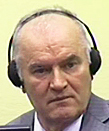
Mladić, Ratko Before I begin this week article, I just briefly want to comment on the high level of variance in the amount of activity from week. Last week, I struggled to find enough material worth commenting. In contrast, I had three topics for this week's article by Wednesday, before the Security Council adopted two new resolutions. In addition to the two resolutions, I'll be commenting on two high level events that began this week, and on a report from the High Commission for Human Rights that was released on Wednesday.


This week really marked the beginning of the end of an era in the Balkans, as the trial against Ratko Mladić began at the International Criminal Tribunal for the former Yugoslavia (ICTY). During the Yugoslav Wars Mladić was a general in the Yugoslav People's Army and commander of the Serb forces in Bosnia. He stands accused of four charges of war crimes, five crimes against humanity charges and two counts of genocide, for actions including the massacre at Srebrenica and the siege of Sarajevo. For all of Mladić's crimes, what I find most appalling is that in all likelihood, he will be acquitted on at least one of the Genocide charges. 

The prosecution in this case were careful when charging Mladić with genocide to separate Srebrenica from the rest of the Bosnian War. They did this for a reason. There is an incredibly strong precedent in international law with regards to genocide during the Bosnian War. In it's judgement of 26 February 2007 in the case Application of the Convention for the Prevention and Punishment of the Crime of Genocide (Bosnia and Herzegovina v. Serbia and Montenegro), the International Court of Justice ruled that Serbia had not committed genocide, and that it had failed in its obligation to prevent genocide only with regards to the events in July of 1995 at Srebrenica, meaning that for legal purposes, there had been no genocide elsewhere during Bosnian War.

Eight of the nine other charges relate to systematic attacks against the Muslim and Croat populations of Bosnia and Herzegovina, ranging from murder and extermination to persecution and deportation. The final charge, the taking of hostages, relates to events of which I had been previously unaware. Shortly before the events Srebrenica, NATO began conducting airstrikes against Serb military targets so as to bring an end to the war. In May and June of 1995, Bosnian Serb forces kidnapped UN peacekeepers and civilian personnel in order force NATO to stop the bombings. The prosecution alleges that Radko Mladić ordered these kidnappings, or had reason to know that they were about take place.


The second high level event that began this week was part two of this year's session of the Conference on Disarmament (CD). The Conference is the main forum the negotiations of international agreements on the regulation of biological, chemical, and nuclear weapons, and other weapons of mass destruction. It currently counts sixty-five members including all nine nuclear weapons states, and most states with civil nuclear programmes. In the past it has produced the Nuclear Non-proliferation Treaty (NPT), the Biological and Chemical Weapons Conventions, and the Comprehensive Test-Ban Treaty (CTBT). 
 
Since the early nineties, the CD has been in grid-lock. Given the current state of affairs, I am thoroughly amazed that a consensus on the text of the CTBT (opened for signature in 1996) was even reached. At present, the two main agreements being negotiated are a Fissile Material Cut-Off Treaty, which would ban the production of fissile material for nuclear weapons, and an agreement to prevent an arms race in outer-space. 

Best I can tell, the grid lock at the CD is a direct result of the end of the Cold War. The tri-polar nature (east/west/non-aligned) of negotiations, made them run a lot smoother. During the Cold War, it was the aligned powers that were the greatest threat. This meant that if east and west managed to agree on something, the non-aligned countries would generally follow suit. For example, this is how the NPT came to be. Nowadays, it is the rogue nuclear nations, in which other countries have only limited influence in defence matters, by this I mean North Korea, Iran, India, Pakistan, and Israel, that pose the largest threat. So long as they don't cooperate, the other nuclear powers will not push matters with other states as they see their own security interests at risk. Getting two sides to reconcile their often conflicting interests was difficult enough. Today, there are between ten and fifteen key players on any given issue, in which there are multiple pairs of states which view each other as mortal enemies.


Next I'll cover the two resolutions adopted by the Security Council. I'll start with the second chronologically. After the resolution on the Sudanese conflict two weeks ago, this was a fairly routine decision. On Friday, the Council decided to extend the mandate of the UN Interim Security Force in Abyei, one of three peacekeeping missions operating in the Sudans. 

The other resolution was on the current situation in Guinea-Bissau. After extensive consultation with regional partners, namely the African Union (AU), the Community of Portuguese Speaking Countries (CPLP) and the Economic Community of West African States (ECOWAS), the Council imposed travel bans on five of the leaders of last months coup d'etat and established a committee to determine which other people should be prevented from leaving Guinea-Bissau. While I feel it's certainly a step in the right direction, I wonder how much of an effect these measures will actually have. I mean these people have a highly unstable country to run. If they were to leave Guinea-Bissau, there's a reasonable chance that they may no longer be in power by the time they get back. 

What surprised me, at least at first glance, is that ECOWAS, represented by Togo on the Council, objected to referring to the pre-coup government as the legitimate government of Guinea-Bissau, as ECOWAS has been a key player in mediating a return to constitutional rule. That being said, a number of ECOWAS member states are themselves military juntas whose legitimacy could be called into question.


The final point I'd like to address this week is the Report by UN Special Rapporteur on the Right to Food on his Official Visit to Canada. The report begins with a criticism of Canada's track record on economic, social, and cultural rights as a whole. This is particularly interesting against the background of the on going student strikes in Quebec, taking due note that there is little to no constitutional and legal protection of economic and social rights. The report criticises the absence of a national right to food strategy, and proceeds to analyse the adverse affects of agricultural policy, and of poor social policy on food security. Notable statistics include the fact that roughly 10% of Canadians live in poverty, of which 1 in 5 are children, One in every thirty Canadians depends on food banks for food security, and perhaps most appallingly, one in every four First Nations children do not have enough to eat on a regular basis.

The content of the report aside, the reaction of the Canadian government to the report is also of some interest to me. First of all, that it was Jason Kenny, the immigration minister, instead of someone from Agriculture, Foreign Affairs, or Fisheries and Oceans, said more than the statement itself. Mr. Kenny stated that Olivier de Schutter, the Special Rapporteur, was an ill-informed, patronising, academic, and that the UN should focus its efforts on the third world. The obvious deflection of the content of the report only further only further reinforces Mr. de Schutter point that the right to food has not been a priority in Canada, and that this government is flouting its international and domestic obligations. It should also be noted that Mr. de Schutter conducted his visit at the request of the Canadian government.

Sunday, May 13, 2012

13 May 2012


I'll start this week far removed from the UN offices in New York and Geneva. Instead we find ourselves in the southern Caucasus, in a border region between Armenia and Azerbaijan: the Nagorno-Karabakh. Based on Soviet borders the regions falls under the sovereignty of Azerbaijan, however the region's population consists overwhelmingly of ethnic Armenians. The region has been a source of conflict since before the collapse of the Soviet Union. In 1988, a full-scale war broke out between the two then-Soviet Republics. A cease-fire agreement was reached in 1994, but continues to be breached on a regular basis by both sides. Against this backdrop, I want to introduce the first topic this week.

Thursday's briefing by the chairs of the Security Council subsidiary committees demonstrated clearly some of the problems with the current setup of the Council. Azerbaijan, a country actively involved in an international conflict, holds the Council presidency this month. The end of the Council meeting degenerated into a somewhat ridiculous back and forth between the Armenian representative, who had been invited to the meeting as an observer, and the Council president, and its not the first time the countries have abused the Council to blast each other. The first meeting convened by the Azerbaijani presidency, while branded as “threats to international peace and security caused by terrorist acts”, was convened for the express purpose of accusing Armenia of terrorism. In fact, every Council meeting this year, at which both countries have spoken, has resulted in arguments similar to the one we saw on Thursday.

While the actions of both countries are reprehensible, what bothers me more is that the rest of the international community allows it. Azerbaijan's election to the Council last fall shows a patent disregard for Article 23 of the UN Charter, which says that in the election of members of the Security Council “due regard [shall be] paid...to the contribution of Members of the United Nations to the maintenance of international peace and security”. Given Azerbaijan's involvement in the Nagorno-Karabakh conflict, its violations international peace and security certainly out way its contributions thereto.

All of this, however, is emblematic of a much larger problem with the Security Council. For all the emphasis that is put on the role of permanent members, and on the veto power, other issues, including the selection non-permanent members and the Council's working methods. The veto in my opinion, for all its problems, is a necessary evil. If there is no clear way for the major powers, democratic or otherwise, to use the UN to there advantage, they will simply marginalise the Organisation. The working methods of the Council, on the other hand, leave much to be desired. Input from non-members is limited. The people most directly effected by the Council's decision are often completely unrepresented. Reports and working papers are produced in an incredibly non-transparent way. Sometimes reports are even doctored by certain Member States.
For all the problems though, I have to give credit where credit is due. A group of countries calling itself the S5 (Small five), consisting of Costa Rica, Jordan, Liechtenstein, Singapore, and Switzerland, has been heavily advocating for reform of the Council's working methods. This group regularly presents draft resolutions to the Council, most recently in April 2011. Unfortunately, their proposals have found little support among the permanent members of the Council, and other relevant states. Even if the Council is reformed, the working methods are unlikely to change, as the status quo remains in the best interest of the permanent membership.


On an unrelated issue, something rather unique happened this week at the UN. The Food Assistance Convention was opened for signature. At present, it is the only binding international agreement on food aid, and is open to signature for the Schengen Zone countries, plus Canada, the US, Mexico, Argentina, Australia, and Japan. While I must admit, I know little about the convention and what it does. What I want to comment on is the material related to the signing procedure put out by the UN. Much of it relates to the presentation of full-powers. Full-powers refers to a document issued by a government granting that state's representative the authority to sign a treaty. In the associated material, the Secretary-General comes across as condescending; scolding the Member States about the presentation of full-powers, leading me to believe that it may have been a problem in the past.

Sunday, May 6, 2012

6 May 2012


This was a fairly slow week at the UN. The General Assembly is completely out of session, having held no official meetings this week. The high profile issues like the deployment of UNSMIS are largely in the procedural stage. There are still a number of issues I'd like to discuss.


Three weeks after expressing its intention to toughen sanction on North Korea, the Security Council finalized the updates to the sanctions regime last Wednesday. In addition to prohibiting the import and export of the latest nuclear and ballistic missile technologies, the Council decided to subject three new North Korean firms to an asset freeze, a state-owned bank and two state-owned export companies. All three are suspected of trying to sell North Korean missile technology to Iran. 

Despite all the tough talk surrounding the adoption of the new sanctions, best I can tell, this is simply an attempt to close loop-holes that have developed in the sanctions over the passed few years. In 2009, the Council identified Korea Mining Development Trading Corporation (KOMID) as North Korea's primary arms dealer. In it's the description of Green Pine Corporation, one of the three companies put under sanction week, the UN stated that “Green Pine [had] taken over many of the activities of KOMID.” Given the highly provocative nature of last month's missile launch, I'd be shocked if the North Korean leadership didn't see this coming and pulled essential assets out of Green Pine, and the other two companies, before they were subjected to the freeze, only to restart the companies under different names, as they did with KOMID three years ago. So long as the Council continues to impose sanctions in a reactionary manner North Korea will be able to side step key elements of the sanctions against them.


On the same day, the Council also adopted a resolution on the inter-Sudanese conflict. The resolution imposed a seven-point cease-fire plan, and requires both Sudanese states to unconditionally return to the negotiating table about finalising the border, and agreements on oil and gas revenue. What surprised me about this resolution was not so much the content, but the time it took to get it adopted. On 26 April, the US distributed an extremely draft resolution. The only difference is that the American draft decided that Sudan would accept the tripartite proposal by the AU, the UN, and the Arab League, whereas the adopted resolution strongly urges them to accept, and the American draft threatened sanctions if both states did not comply, the resolution does not. I find it hard to believe that it took almost a week to adopt such minor changes. The only thing I can imagine is that the US and the European members of the Council were insisting on the provision about sanctions, while Russia, China, and the Presidency, currently held by Azerbaijan, strongly objected. 


The other two points of interest for me this week were a pair of reports released by the Secretary-General. The first is on the United Nations Interim Administration in Kosovo (UNMIK). Kosovo represents somewhat of an anomaly in the UN system. After Palau was accepted as a UN member in 1994, the Trusteeship Council concluded its mandate and there were no more territories under direct UN administration. Yet in 1999, following the end of the Yugoslav Wars, the Security Council established UNMIK to essentially serve as the Kosovar government. At present however, UNMIK's role is minimal. Most of the day to day administrative activities are handled by the self-proclaimed Republic of Kosovo with support from the EU mission EULEX and KFOR. The key political problems addressed in the report are largely due to today's parliamentary and presidential elections in Serbia. Regions of northern Kosovo, where Serbs form the majority, had wanted to hold local elections under the same time table and in accordance with Serbian law. Perhaps more detrimental, these same communities, with backing from Belgrade, held a referendum last February asking voters whether they accepted the Kosovo's self-proclaimed government. The governments authority was overwhelmingly rejected, but given the way it was conducted, the referendum has little legitimacy, and according to UNMIK, no legal consequences.

In the long term, I think universal recognition of Kosovo's independence is inevitable. Last March, the EU agreed to accept Serbia as a candidate-country after three years consideration. It will probably be in Serbia's best interest to accede to the EU. Something which will remain impossible until the Kosovo question is resolved. All EU members, except Greece, Roumania, and Spain, have recognised Kosovo's independence. In 2008, the ICJ ruled that the Kosovo's declaration of independence was done in conformity with international law. Given these circumstances, recognition by Serbia is the most likely resolution.


The other report is on an issue that has received almost no attention in the West, namely the political situation in Guinea-Bissau. If nothing else, this report serves to highlight the severe apathy in the West for issues in Sub-Saharan Africa. Almost a month ago, element in the armed forces of Guinea-Bissau carried out a coup-d'état, arresting the President, the Prime Minister, and the Chief of Defence Staff. Other key government officials, including the President of the Supreme Court and at least three cabinet ministers have been forced into hiding. 

As was the case with coup in Mali several weeks ago, the Economic Community of West African States (ECOWAS) immediately began mediation for a return to constitutional order. The AU and the Community of Portuguese Speaking Countries (CPLP) both suspended Guinea-Bissau's membership. ECOWAS, the AU, and the CPLP have all declared their intention to impose sanction against coup leaders. The EU and the UN are considering doing the same. 

The Secretary-General suggested four possible option to the Security Council in his report: Mediation, targeted sanctions, the deployment of training and protection units, and the deployment of a peacekeeping force. Even though it was requested by the Prime Minister and the Minister of Foreign Affairs, the deployment of a peacekeeping force seems unlikely in my opinion. The Security situation in Guinea-Bissau is calm, meaning such a deployment would only heighten tensions. That the UN will lend its support to mediation, almost goes without saying. It's the other to proposals that are less clear cut to me. In a presidential statement two weeks ago, the Council said it would consider targeted sanctions. Whether or not it will follow through remains to be seen. As for the training and protection units, I'm not entirely sure what that would look like, but given that the Peacebuiling Commission already has troops on the ground, it seems like a feasible option.

Sunday, April 29, 2012

29 April 2012


This week had none of the high profile developments of last week, but that by no means that nothing happened at the UN. In addition to a number of interesting Security Council meetings, there were two major judicial developments this week. I'll start with those.


On Thursday, the UN Special Court for Sierra Leone found former Liberian president Charles Taylor guilty on all eleven war crimes and crimes against humanity charges against him. Admittedly, there isn't all that much to say on this topic. The man ran a rebel movement that committed unspeakable atrocities. He got what he deserved. It's all ways a good day when men like this are brought to justice. At present, Mr. Taylor is under arrest pending sentencing two weeks from now.
The second development was Friday's concurrent elections in the General Assembly and Security Council the fill the vacant seat on the International Court of Justice. I'll start with a bit of background. The vacancy occurred last October, when King Abdullah II of Jordan name Judge Awn Shawkat Al-Kasawneh as his new Prime Minister. As Judge Al-Kasawneh was not one of the five judges whose term expired this February a special election was needed to fill his seat. 

India, Russia, Peru, Chile, and Colombia nominated Dalveer Bhandari, Senior Justice on the Supreme Court of India. The Philippines nominated Florentino Feliciano member of the World Bank Administrative Tribunal, and former President of the WTO Appellate Tribunal. Finally, Lebanon nominated Ghaleb Ghanem President of the Association of Francophone Supreme Courts and former Chief Justice of the Supreme Court of Lebanon. With the explicit support of three members of the Security Council, including Russia and India, Judge Bhandari's election to the Court was all but guaranteed. Given these conditions, Judge Ghanem withdrew from the proceedings a week before the elections.

In spite of this, I'll offer my analysis of the three candidates. Judge Ghanem's election would have been the least perturbing to the composition of the Court. Like Judge Al-Kasawneh, he is an Arab Jurist from a civil law country operating under the Napoleonic code of France. Of the three candidates, Judge Feliciano is the most obviously qualified as an international judge. He was undoubtedly nominated, at least in part, because of his expertise in international economic law, since three of the thirteen cases pending before the ICJ have a significant economic component. Finally, Judge Bhandari's nomination was more political than anything else. While is obviously qualified as an international jurist, he is more well known for civil matters. For example, one of his judgement has significantly defined Indian divorce law. His nomination and the fact that it received broad support is largely due to the fact that India is one of, if not the most significant international player without representation on the ICJ. In the end, he received thirteen of fifteen votes on the Security Council and 127 of 180 votes in the General Assembly. Judge Bhandari will serve until the end of Judge Al-Kasawneh's term in 2018.


There were also further developments on the Syrian issue. The UN published its Preliminary Understanding with Syria regarding UNSMIS, outlining the rights and responsibilities of UNSMIS, the Syrian government and the opposition. Having read the document, I must admit its more than little naive. In a section titled Basic Assumptions, the UN states that for the purposes of the document it assumes that as of 10 April, Syria had taken measures to implement in good faith the Six-point plan of Joint Special Envoy Kofi Annan.


The remaining issues at the UN this week that are of interest to me both dealt with Africa. On Monday, the Security Council considered the Secretary-General's report on the Western Sahara, and decided to extend the mandate of the peacekeeping mission there. MINURSO (french acronym for United Nations Mission for the Referendum in Western Sahara) represents, in my opinion, one of the most forgotten failures of the UN in recent years. Originally established in 1991, MINURSO's mandate was to oversee a ceasefire between the Moroccan Army and the Frente Prolisario, a militant faction representing the Saharawi people, and the organize a free and fair referendum on the national question of Western Sahara. While there continue to be isolated violent incidents, none of them are remotely close to bringing the region into out and out conflict. All told the security situation in the Western Sahara is more or less stable, and has been for the better part of the last decade.

In spite of this, we are no closer to a referendum than in 1992 when the situation was declared stable enough to proceed to voting. This is largely to due to Moroccan interference in MINURSO. As a result of strong French support, Morocco has been able effectively manipulate the mission to its own interests. For example, MINURSO is one of the few UN Missions without a human rights mandate. Further still, any reference to such a mandate was excluded, due to Moroccan censorship, from the Secretary-General's most recent report on the Mission in spite of requests from several country's to study the matter. At Monday's Security Council meeting, South Africa went so far as hint at violations of Article 100 of the UN Charter which requires the neutrality of the SG.


In contrast to the Western Sahara, the final issue that I will address this week is one of the UN's recent successes. On Thursday, the Security Council extended and modified the sanctions against Côte d'Ivoire. While not the sole factor, these sanctions helped bring an end to the Ivorian Civil War in 2007 and forced President Laurent Gbagbo to step down in 2011, after he had lost the 2010 election. The key factor here being proper targeting. In the case of Côte d'Ivoire, it was possible to clearly identify the sources of income the parties of the civil war used to fund their war efforts. Once under sanction, these sources began to dry up, and the flow of arms in the country was reduced, giving all parties more motivation to negotiate. Unfortunately, this model is not universally applicable.

Sunday, April 22, 2012

22 April 2012


Through Model UN over the past year, I learned a great deal about the finer workings of the United Nations, only adding to my already considerable curiosity and fascination with the organization. With both the simulation and my exams being over, I find myself with spare time and in need of an outlet for this curiosity. To that end I am pleased to announce “UN this week”, a, hopefully, weekly blog containing my thoughts about the comings and goings at the UN during the previous week.


The week started with an significant development on the Korean peninsula when North Korea attempted to launch a satellite into orbit. The launch, being really just a disguised missile test, failed spectacularly with the rocket crashing into the Yellow Sea just minutes after being launched. Personally, I think that short of a failure to launch for technical reasons, this was probably the best outcome for all involved.

The DPRK remains probably the most unpredictable regime in the world prone to radical shifts in policy with serious security repercussions in Northeast Asia and beyond. A decision not to launch the satellite would have represented the second of such shifts in six weeks, the DPRK having agreed to, among other things, a moratorium on missile launches in its 29 February bilateral agreement with the US. Flip-flopping on missile launches for a second time would signalled clear internal conflicts in the North Korean government, an indication that Kim Jong-un is either highly manipulable or unable to control certain elements within his in inner circle. Fortunately, it didn't come to that.

As it is, North Korea get their missile launch without gaining the information they would have gathered from a successful test, and the South and its western allies get some sense of stability in the new North Korean leadership, though of course they can't say so publicly.

This brings us around the United Nations. Right now, the UN could hardly be a more hostile environment for North Korea. The Secretary-General is South Korean, the Director-General of the IAEA is Japanese, the chair of the committee controlling sanctions against the DPRK is a European (Portuguese) and the US holds the presidency of the Security Council. All this makes Ban Ki-moon's restraint in his statement on the launch all the more remarkable. Had he wanted to, Mr. Ban would have had all the political cover in the world to bash North Korea. Instead, he issued a fairly dry statement describing the indecent as “deplorable”. He went on to point out that the launch was clear violation of Security Council resolution 1874, and reaffirmed his commitment to peace and stability in the region. I suppose he figured, with UN being so hostile to the DPRK, someone else would do the bashing for him.

This is exactly what happened. Three days later, the Security Council adopted a presidential statement on the matter. In it, the council decided to expand sanctions against the DPRK. What I find of particular interest here is that the Council adopted the sanctions without passing a new resolution on the subject. In the past, new sanctions have always been instituted by resolution. Though I suppose it makes sense. The Council didn't adopt any new sanctions; it just decided to make the existing ones more rigorous.


The second major development this week was last Saturday's decision to deploy a supervision mission to Syria, and the decision to expand it from 30 to 300 unarmed observers a week later. To be honest, these was a predictable decision. It was merely a question of when, given that Join-Special-Envoy Kofi Annan included it his six-point plan. What is of greater interest to me is how the matter was covered in the international media. All the coverage in the build up to the decision to deploy mission was about Russia's position.

Russia had previously vetoed two Security Council resolutions on Syria, last October and last February. What is interesting to note is that both drafts were also vetoed by China, yet there was almost no mention of this in the coverage. The focus on Russia certainly makes sense given that how they would vote was unclear going into the final round of the negotiations, but somehow the fact that China's position had changed was all but ignored. I'm not entirely sure how they pulled it off, but from a public image standpoint, it was brilliant play by China.

The second decision was a bit of an eye-opener for me, not because of the decision itself, but because for the first time I was able to see the development of a resolution. This will be of special interest to my Model UN friends, since we get to see resolution merging in action. On Wednesday, Ban Ki-moon proposed the deployment of 300 observers to the Security Council. Best I can tell, negotiations on the details began immediately, and by Friday night two draft resolutions were being considered, one supported by the US and European members of the council, another by Russia. In the end, the west was forced give up references to “torture, arbitrary detentions, abductions, sexual violence and other abuses against women, children and minorities”, a specific reference to the the withdrawal of Syrian in the mandate of UNSMIS (United Nations Supervision Mission in Syria), and perhaps significantly, the threat of possible sanctions.

As for my thoughts on the mission itself, I'm not entirely sure what to think. On one hand, I have to question its effectiveness. 300 unarmed observers are not going to be able to stop the violence. On the other hand, they clearly have there uses. We're talking about international personnel who are going to see exactly what's going, and who Bashar al-Assad is not going to risk harming. For example, when the advance team visited Homs earlier this week, it was the first time in months that the violence there died done slightly.

For the time being, UNSMIS, in its current form, is probably best balance between what is feasible and what is necessary. Doing nothing is obviously not an option, but the deployment of a full scale peacekeeping mission would irresponsible. The fighting is still so intense that such a mission would probably result in significant international casualties and be largely ineffective.


On a final point, I'd like briefly address a subject that has been completely ignored in the international media. This past week, under the mediation of of President Blaise Campaoré of Burkina Faso, the relevant parties in Mali made the first steps to returning to constitutional order following the Coup d'etat a month ago.